Around 1912, the Maatschappij tot Exploitatie van Staatsspoorwegen had their first experience with the new and strong 2′C locomotives of the series 700, but there was a need for a tank engine version of the series 700; however, this was not possible because it would have been heavier than the maximum axle load of sixteen tons. The SS built the 2′C2′ locomotives with less tractive effort than the series 700 and with only two inside cylinders, but with features quite similar to the Series 700, such as the copper-capped chimney, the copper steam dome, the wheel diameter and the maximum boiler pressure.Thus it was considered that Beyer-Peacock had built a very robust yet elegant locomotive.[1]
Due to the outbreak of World War I in July 1914, only 26 of the 40 locomotives ordered were delivered to the SS. The remaining 14 locomotives have been seized by the Railway Operating Division. This was part of the British War Department. The locomotives were sent to France for the benefit of the Allied armies. After the war, the Chemins de fer du Nord purchased all 14 examples which became Nord 3.871 to 3.884 [fr].[2]
^Waldorp, H. (1986). Onze Nederlandse stoomlocomotieven in woord en beeld [Our Dutch steam locomotives in words and pictures] (in Dutch) (7e, gew. dr ed.). Almaar: De Alk. ISBN90-6013-947-X. OCLC63833327.
^Henken, Paul (2015). Serie SS 1201-1240 (NS-serie 6000) : de 2′C2′-tenderlocomotieven van de Staatsspoorwegen [SS 1201-1240 series (NS 6000 series) : the 2′C2′ tender locomotives of the State Railways] (in Dutch) (Eerste druk ed.). 's-Hertogenbosch. ISBN978-90-71513-88-6. OCLC927525803.{{cite book}}: CS1 maint: location missing publisher (link)


 SS No. 1210 later renumbered to NS No. 6010
 NS 6015 on the turntable in Amersfoort. (Between 1930 and 1939)
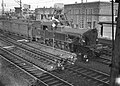 An NS 6000 with carriages near the yard on the east side of Amsterdam C.S. (13-12-1940)
 NS 6005 with a train along the platform of Valkenburg station. (03-07-1947)
 NS 6015 with a train in Hilversum. (June 1935)
 NS 6006 during shunting at the yard in Roosendaal (1950)
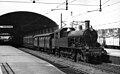 NS 6024 with a train to Roosendaal at Rotterdam D.P. station. (May 1935)
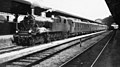 NS 6021 with train D111 from Hoek van Holland along the platform of Utrecht C.S. (Between 1925 and 1935)
 NS 6004 with a train near Crailoo. (Between 1940 and 1941)
 NS 6013 just before the locomotive was scrapped (27-05-1957)


