Matnog | |
|---|---|
| Municipality of Matnog | |
 Skyline of Matnog | |
 Flag  Seal | |
| Nicknames: Gateway of Luzon Gateway to Visayas | |
 Map of Sorsogon with Matnog highlighted | |
 Interactive map of Matnog | |
.svg)  Matnog Location within the Philippines | |
| Coordinates: 12°35′08″N 124°05′08″E / 12.5856°N 124.0856°E | |
| Country | Philippines |
| Region | Bicol Region |
| Province | Sorsogon |
| District | 2nd district |
| Founded | May 17, 1800 |
| Barangays | 40 (see Barangays) |
| Government | |
| • Type | Sangguniang Bayan |
| • Mayor | Cattleya M. So |
| • Vice Mayor | Emilio Ubaldo III |
| • Representative | Vacant |
| • Municipal Council | Members |
| • Electorate | 30,571 voters (2025) |
| Area | |
• Total | 162.40 km2 (62.70 sq mi) |
| Elevation | 49 m (161 ft) |
| Highest elevation | 354 m (1,161 ft) |
| Lowest elevation | 0 m (0 ft) |
| Population (2024 census)[3] | |
• Total | 42,444 |
| • Density | 261.35/km2 (676.91/sq mi) |
| • Households | 9,455 |
| Economy | |
| • Income class | 3rd municipal income class |
| • Poverty incidence | 32.96 |
| • Revenue | ₱ 234.5 million (2022) |
| • Assets | ₱ 304.8 million (2022) |
| • Expenditure | ₱ 228.3 million (2022) |
| • Liabilities | ₱ 158.6 million (2022) |
| Service provider | |
| • Electricity | Sorsogon 1 Electric Cooperative (SORECO 1) |
| Time zone | UTC+8 (PST) |
| ZIP code | 4708 |
| PSGC | |
| IDD : area code | +63 (0)56 |
| Native languages | Sorsogon language Tagalog |
Matnog, officially the Municipality of Matnog (Waray Sorsogon: Bungto san Matnog; Waray: Bungto han Matnog, Tagalog: Bayan ng Matnog), is a municipality in the province of Sorsogon, Philippines and is the southernmost part of Luzon. According to the 2024 census, it has a population of 42,444 people.[5]
The town's port is one of the busiest in the region, playing host to millions of people crossing the San Bernardino Strait to Northern Samar annually. It is the jump off point to Visayas and vice versa.
Etymology
[edit]Local elders say that the name Matnog comes from the Bicol word "matonog", which means very audible that describes the loud sound of the waves. Some attribute the name to the sound of the gong used by early chieftains to call council meetings, while others link it to the noise of the tidal rip in the San Bernardino Strait.[6]
History
[edit]
In 1785, Matnog became a barrio of Bulusan, with Juan Evangelista serving as its first head. Fifteen years later, it was designated as Puerto Civil. It later became a separate parish on November 21, 1963.[6]
Geography
[edit]
Matnog is 65 kilometers (40 mi) from Sorsogon City and 646 kilometers (401 mi) from Manila.
Barangays
[edit]Matnog is politically subdivided into 40 barangays. Each barangay consists of puroks and some have sitios.
- Balocawe
- Banogao
- Banuang-daan
- Bariis
- Bolo
- Bon-Ot Dako (Big)
- Bon-Ot Saday (Small)
- Cabagahan
- Calayuan
- Calintaan
- Caloocan (Poblacion)
- Calpi
- Camachiles (Poblacion)
- Camcaman (Poblacion)
- Coron-coron
- Culasi
- Gadgaron
- Genablan Occidental
- Genablan Oriental
- Hid-hid
- Laboy
- Lajong
- Mambajog
- Manjumlad
- Manurabi
- Naburacan
- Paghuliran
- Pange
- Pawa
- Poropandan
- Santa Isabel
- Sinalmacan
- Sinang-Atan
- Sinebaran
- Sisigon
- Sua
- Sulangan
- Tablac (Poblacion)
- Tabunan (Poblacion)
- Tugas
- Para sa Training
Climate
[edit]| Climate data for Matnog, Sorsogon | |||||||||||||
|---|---|---|---|---|---|---|---|---|---|---|---|---|---|
| Month | Jan | Feb | Mar | Apr | May | Jun | Jul | Aug | Sep | Oct | Nov | Dec | Year |
| Mean daily maximum °C (°F) | 27 (81) |
28 (82) |
29 (84) |
31 (88) |
31 (88) |
30 (86) |
29 (84) |
29 (84) |
29 (84) |
29 (84) |
29 (84) |
28 (82) |
29 (84) |
| Mean daily minimum °C (°F) | 22 (72) |
21 (70) |
22 (72) |
23 (73) |
24 (75) |
25 (77) |
25 (77) |
25 (77) |
25 (77) |
24 (75) |
23 (73) |
23 (73) |
24 (74) |
| Average precipitation mm (inches) | 65 (2.6) |
44 (1.7) |
42 (1.7) |
39 (1.5) |
87 (3.4) |
150 (5.9) |
184 (7.2) |
153 (6.0) |
163 (6.4) |
154 (6.1) |
127 (5.0) |
100 (3.9) |
1,308 (51.4) |
| Average rainy days | 13.9 | 9.2 | 11.0 | 12.5 | 19.6 | 24.3 | 26.5 | 25.0 | 25.5 | 24.4 | 19.4 | 15.1 | 226.4 |
| Source: Meteoblue[7] | |||||||||||||
Demographics
[edit]| Year | Pop. | ±% p.a. |
|---|---|---|
| 1903 | 2,457 | — |
| 1918 | 4,437 | +4.02% |
| 1939 | 10,119 | +4.00% |
| 1948 | 12,036 | +1.95% |
| 1960 | 15,570 | +2.17% |
| 1970 | 20,330 | +2.70% |
| 1975 | 20,680 | +0.34% |
| 1980 | 24,193 | +3.19% |
| 1990 | 25,957 | +0.71% |
| 1995 | 29,309 | +2.30% |
| 2000 | 32,712 | +2.38% |
| 2007 | 34,517 | +0.74% |
| 2010 | 37,641 | +3.20% |
| 2015 | 41,101 | +1.69% |
| 2020 | 41,989 | +0.45% |
| 2024 | 42,444 | +0.26% |
| Source: Philippine Statistics Authority[8][9][10][11][12] | ||
The native people that settled in Matnog are the Agta, Tabangon, and Cimaron Tribe.
Economy
[edit]Poverty incidence of Matnog
56.73
57.60
46.70
43.15
45.21
45.25
37.12
32.96
Source: Philippine Statistics Authority[13][14][15][16][17][18][19][20]
Transportation
[edit].jpg)
Transportation includes buses going to and from Metro Manila and Bulan and ferries going to and from Allen, Northern Samar.[21]
In order to spur development in the municipality, The Toll Regulatory Board declared Toll Road 5 the extension of South Luzon Expressway.[22] A 420-kilometer (260 mi), four-lane expressway starting from the terminal point of the now under construction SLEX Toll Road 4 at Barangay Mayao in Lucena, Quezon, to Matnog, Sorsogon, near the Matnog Ferry Terminal. On August 25, 2020, San Miguel Corporation announced that they will invest the project which will reduce travel time from Lucena to Matnog from 9 hours to 5.5 hours.[23]
Education
[edit]The Matnog Schools District Office governs all educational institutions within the municipality. It oversees the management and operations of all private and public, from primary to secondary schools.[24]
Primary and elementary schools
[edit]- Balocawe Elementary School
- Banogao Elementary School
- Banuang-Daan Elementary School
- Bolo Elementary School
- Bon-ot (Big) Elementary School
- Bon-ot (Small) Elementary School
- Cabagahan Elementary School
- Calayuan Elementary School
- Calintaan Elementary School
- Calpi Elementary School
- Coron-Coron Elementary School
- Culasi Elementary School
- Gadgaron Elementary School
- Genablan Occidental Elementary School
- Genablan Or. Elementary School
- Hidhid Elementary School
- Jose C. Frencillo Elementary School
- Laboy Elementary School
- Lajong Elementary School
- Mambajog Elementary School
- Manjumlad Elementary School
- Manurabi Elementary School
- Matnog Central School
- Matnog Seventh Day Adventist Elementary School
- Paghuliran Elementary School
- Pange Elementary School
- Pawa Elementary School
- Poropandan Elementary School
- Sinang-Atan Elementary School
- Sinalmacan Elementary School
- Sinebaran Elementary School
- Sta. Isabel Elementary School
- Sua Elementary School
- Tablac Elementary School
- Tugas Elementary School
- Vicente Dorotan Elementary School
Secondary schools
[edit]- Culasi National High School
- Matnog Nationl High School
- Pacific View Academy
- Sisigon Integrated School
- Sua High School
- Tiong Hen So Memorial High School
Gallery
[edit]-
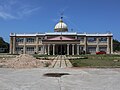 New Matnog Municipal Hall
 -
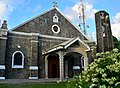 Matnog Church
 -
 Matnog Beach
 -
 Matnog Port arch
 -
 Pan-Philippine Highway in Camcaman
.jpg)


.jpg)
.jpg)
References
[edit]- ^ Municipality of Matnog | (DILG)
- ^ "2015 Census of Population, Report No. 3 – Population, Land Area, and Population Density" (PDF). Philippine Statistics Authority. Quezon City, Philippines. August 2016. ISSN 0117-1453. Archived (PDF) from the original on May 25, 2021. Retrieved July 16, 2021.
- ^ "2024 Census of Population (POPCEN) Population Counts Declared Official by the President". Philippine Statistics Authority. 17 July 2025. Retrieved 18 July 2025.
- ^ "PSA Releases the 2021 City and Municipal Level Poverty Estimates". Philippine Statistics Authority. 2 April 2024. Retrieved 28 April 2024.
- ^ "2024 Census of Population (POPCEN) Population Counts Declared Official by the President". psa.gov.ph. July 17, 2024. Retrieved November 14, 2025.
- ^ a b "Matnog Executive Summary" (PDF). Commission on Audit. 2022. Retrieved August 25, 2024.
- ^ "Matnog, Sorsogon : Average Temperatures and Rainfall". Meteoblue. Retrieved 29 December 2018.
- ^ "2024 Census of Population (POPCEN) Population Counts Declared Official by the President". Philippine Statistics Authority. 17 July 2025. Retrieved 18 July 2025.
- ^ Census of Population (2015). "Region V (Bicol Region)". Total Population by Province, City, Municipality and Barangay. Philippine Statistics Authority. Retrieved 20 June 2016.
- ^ Census of Population and Housing (2010). "Region V (Bicol Region)" (PDF). Total Population by Province, City, Municipality and Barangay. National Statistics Office. Retrieved 29 June 2016.
- ^ Censuses of Population (1903–2007). "Region V (Bicol Region)". Table 1. Population Enumerated in Various Censuses by Province/Highly Urbanized City: 1903 to 2007. National Statistics Office.
- ^ "Province of". Municipality Population Data. Local Water Utilities Administration Research Division. Retrieved 17 December 2016.
- ^ "Poverty incidence (PI):". Philippine Statistics Authority. Retrieved December 28, 2020.
- ^ "Estimation of Local Poverty in the Philippines" (PDF). Philippine Statistics Authority. 29 November 2005.
- ^ "2003 City and Municipal Level Poverty Estimates" (PDF). Philippine Statistics Authority. 23 March 2009.
- ^ "City and Municipal Level Poverty Estimates; 2006 and 2009" (PDF). Philippine Statistics Authority. 3 August 2012.
- ^ "2012 Municipal and City Level Poverty Estimates" (PDF). Philippine Statistics Authority. 31 May 2016.
- ^ "Municipal and City Level Small Area Poverty Estimates; 2009, 2012 and 2015". Philippine Statistics Authority. 10 July 2019.
- ^ "PSA Releases the 2018 Municipal and City Level Poverty Estimates". Philippine Statistics Authority. 15 December 2021. Retrieved 22 January 2022.
- ^ "PSA Releases the 2021 City and Municipal Level Poverty Estimates". Philippine Statistics Authority. 2 April 2024. Retrieved 28 April 2024.
- ^ Bloom, Greg (September 15, 2010). Philippines. Lonely Planet. p. 202. ISBN 9781742203706.
- ^ "SLEX Toll Road 5 to connect Quezon province to Sorsogon". YugaTech. August 18, 2020. Retrieved January 9, 2021.
- ^ "San Miguel investing P122B for SLEX Toll Road 5, Pasig River Expressway projects". GMA News Online. August 25, 2020. Retrieved January 9, 2021.
- ^ "Masterlist of Schools" (PDF). Department of Education. January 15, 2021. Retrieved November 14, 2025.
External links
[edit]
- Matnog Profile at PhilAtlas.com
- Philippine Standard Geographic Code
- Philippine Census Information
- Local Governance Performance Management System
- Matnog, Sorsogon LGU Profile
Places adjacent to Matnog | |
|---|---|


 Province of Sorsogon Province of Sorsogon | |
|---|---|
Sorsogon City (capital and largest city) | |
| Municipalities | |
| Component city | |