Vertically fringed cloth loaded in its center by a radiant sun, similar to that of the National Flag behind this two lines of equal size of upper red and lower black, symbolizing the blood spilled in the operation theater and the black line the footprint of the ground forces (Argentine Army). On the upper end three broken lines is a symbol of the winds representing the Argentine Air Force. Lower edge wavy movement of lines is a symbol of the Argentine Navy. Thus leaving the veterans' flag with the three weapons that defended our area of honor and remembering the fallen in the line of duty. The contrasting colors indicate that absolutely not everything is won in victory and nothing is definitely lost in defeat: this vertical cut flag recalls one of the original ones given by General Manuel Belgrano to this land on February 27, 1812, in the Barrancas del Rio Parana, the first flag of Argentina.
?–2013
Argentine triband with a black profile of the Malvinas islands in the center instead of the Sun of May.
Three equal horizontal bands, the upper and lower bands are dark blue, and the lower band is white. A red Sun of May is depicted on the white band. Four red Phrygian caps are placed in the corners.
1835–1850
Three equal horizontal bands, the upper and lower bands are dark blue, and the lower band is white. A red Sun of May is depicted on the white band. Four red Phrygian caps mounted on pikes are placed in the corners.
Two horizontal stripes (light blue and white) symbolizing the "first independence", with an additional red star symbolizing the "second and final independence.[8]
^"Símbolos Nacionales" [National Symbols] (in Spanish). Presidency of the Argentine Nation. Retrieved 29 December 2012. La Bandera Oficial de la Nación tiene sus colores distribuidos en tres fajas horizontales, dos celestes y una blanca en el medio, en cuyo centro se reproduce el Sol figurado de la moneda de oro de ocho escudos y de la de plata de ocho reales que se encuentra grabado en la primera moneda argentina. El color del sol es el amarillo del oro.
^"Decreto 1650/2010" (in Spanish). Argentina: Poder Ejecutivo Nacional. 23 November 2010. Archived from the original on September 24, 2020.
^"La Bandera Nacional" [The National Flag] (in Spanish). Belgranian National Institute. Archived from the original on 5 August 2012. Retrieved 29 December 2012. Día 16 de marzo de 1818: el Soberano Congreso dispuso "que la Bandera de Guerra Nacional se componga de tres tiras horizontales; la de en medio blanca, ocupando la mitad, y la alta y baja azules iguales, esto es del quinto de anchura, con un sol en la lista de en medio; y la de los buques mercantes lo mismo sin sol", según lo que participó el Comandante General de Marina, Don Matías de Aldao, al Capitán del Puerto de Buenos Aires.
^"Símbolos Nacionales" [National Symbols] (in Spanish). Presidency of the Argentine Nation. Retrieved 29 December 2012. La Bandera Oficial de la Nación tiene sus colores distribuidos en tres fajas horizontales, dos celestes y una blanca en el medio, en cuyo centro se reproduce el Sol figurado de la moneda de oro de ocho escudos y de la de plata de ocho reales que se encuentra grabado en la primera moneda argentina. El color del sol es el amarillo del oro.
^"Navy jack". Flags of the World. Retrieved 29 December 2012.

.svg)
.svg)


.svg)
.svg)
.svg)
.svg)


.svg)
.svg)
.svg)
.svg)
.svg)


.svg)

.svg)

.svg)


.svg)
.svg)
.svg)
.svg)
.svg)


.svg)
.svg)
.svg)
.svg)
.svg)
.svg)
.svg)
.svg)
.svg)
.svg)
.svg)

.svg)
.svg)
.svg)
.svg)
.svg)
.svg)
.svg)
.svg)
.svg)
.svg)
.svg)
.svg)
.svg)
.svg)


.svg)
.svg)
.svg)
.svg)
.svg)


.svg)
.svg)


.svg)


.svg)


.svg)


.svg)
.svg)

.svg)


.svg)


.svg)

.svg)


.svg)


.svg)


.svg)


.svg)
.svg)
.svg)
.svg)


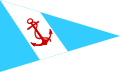 Yacht Club Argentino
 Club Delta Argentino
 Caption=Club Náutico Buchardo
 Caption=Club Marinas Puerto Santa Fe
 Club de Náutica y Pesca "Comandante Espora"
 Club Regatas Chascomus
 Club Regatas La Plata
 Club Regatas San Nicolas
 Club San Fernando
 Club Universitario de Buenos Aires
 Club Náutico Albatros
 Club Náutico Bahia Blanca
 Club Náutico Cordoba
 Club Náutico Mar Plata
 Club Náutico Olivos
 Club Náutico San Isidro
 Club Mendoza de Regatas
 Club Náutico San Martin
 Club Náutico San Pedro
 Club Náutico Sudeste
 Club Náutico Victoria
 Club Náutico Zarate
 Club de Veleros Barlovento
 Club de Veleros Rosario
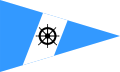 Club de Veleros San Isidro
 Yacht Club Rosario
 Yacht Club Olivos
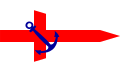 Yacht Club Santa Fe
 Club Náutico Quilmes
 Club Náutico San Fernando
 Club Suizo de Buenos Aires
 Yacht Club Buenos Aires
 Rowing Club Argentino
 Yacht Club Neuquén
 Yacht Club San Isidro
 Yacht Club Entrerriano
 Yacht Club Centro Naval


.svg)


 Media related to Flags of Argentina at Wikimedia Commons
